Characters, Memories and Creators: Reading the Interface
Three navigation items carry almost all of the meaning on a character chat platform, and each one answers a different question: what can I talk to, what does it remember about me, and who built it. On Crushon the split is Characters, Memories and Creators, and an illustrative usage profile that starts at two sessions in week one and ends at eight a week reaches 28 sessions by week six — a schedule that only works if you know which of the three doors to use.

Key takeaways
- Characters is the discovery door: it lists what you can open, with filters such as Unfiltered, Filtered and 18+, plus Recent Hits and Animated shelves.
- Memories is the continuity door: it is where the preference detail behind "remembers your preferences" becomes visible and editable.
- Creators is the authorship door: it groups characters by the accounts that publish them and feeds the weekly rankings every Thursday.
- Read in that order — open, recall, attribute — and a first month settles at roughly 28 sessions without any change in daily habits.
Characters is a catalogue, not a feed
The first item in the navigation is a catalogue. It shows what is available, sorted and filtered, and the filter strip is the part worth learning first: Unfiltered, Filtered and 18+ change which slice of the catalogue you are looking at rather than changing anything about a given character. Alongside the filters sit shelves such as Recent Hits and Animated, plus a gender filter for narrowing a list quickly.
Use this door when you know you want something new and you do not yet know what. The character search view is the same catalogue with a query attached, which is why search tags and the weekly rankings live there rather than on the homepage. Starting here means you are choosing a stranger on purpose, and the counters and creator signatures you meet along the way are the evidence you get to work from.
Memories is where continuity lives
The second door is the one that changes the feel of a long conversation. A chat system that only stores text has a short attention span: it can quote the last few exchanges and nothing older. A memory layer is different. It keeps the details that matter to you — your preferences, the names and story points you have settled on — and feeds them back into later replies, which is what the platform means when it says characters remember your preferences and adapt over time.
That makes the Memories view a maintenance screen, not just a display. If a character keeps returning to a detail you have moved past, the memory record is the place to correct it. If a chat feels flat after a few weeks, the memory record usually explains why: there is less context in play than you assumed. Treat the tab as the place you check when a conversation drifts, and it stops being a mystery.
| Navigation item | Question it answers | Habit it supports |
|---|---|---|
| Characters | What can I talk to right now, and how do I narrow the list? | Use the Unfiltered, Filtered, 18+ and gender filters before scrolling |
| Memories | What does the character retain about me between sessions? | Review and correct stored preferences when a chat drifts |
| Creators | Who published this character, and what else do they make? | Follow a signature rather than re-browsing the whole catalogue |
| Search | What do people look for most, and what ranks this week? | Treat rankings as a dated snapshot; they refresh every Thursday |
| Shelf labels | Recent Hits and Animated distinguish fresh and animated listings | Pick a shelf before applying filters to keep the list short |
Creators is the attribution layer
The third door answers who made what. Creators group the catalogue by the accounts that publish characters, and the weekly rankings give two leaderboards, one for Creators and one for Characters. Both are refreshed every Thursday, which is the detail that decides how you should use them: a ranking is a dated snapshot, not a permanent scoreboard.
Attribution is also the practical bridge to the other two doors. When a creator's work appeals to you, the Creators view turns that into a shortlist without any further browsing, and the memories attached to those characters stay consistent because a single creator tends to keep a consistent tone. Read the three items in the order the navigation lists them and the interface stops feeling like scattered features.
Worked example: a first month at eight sessions a week
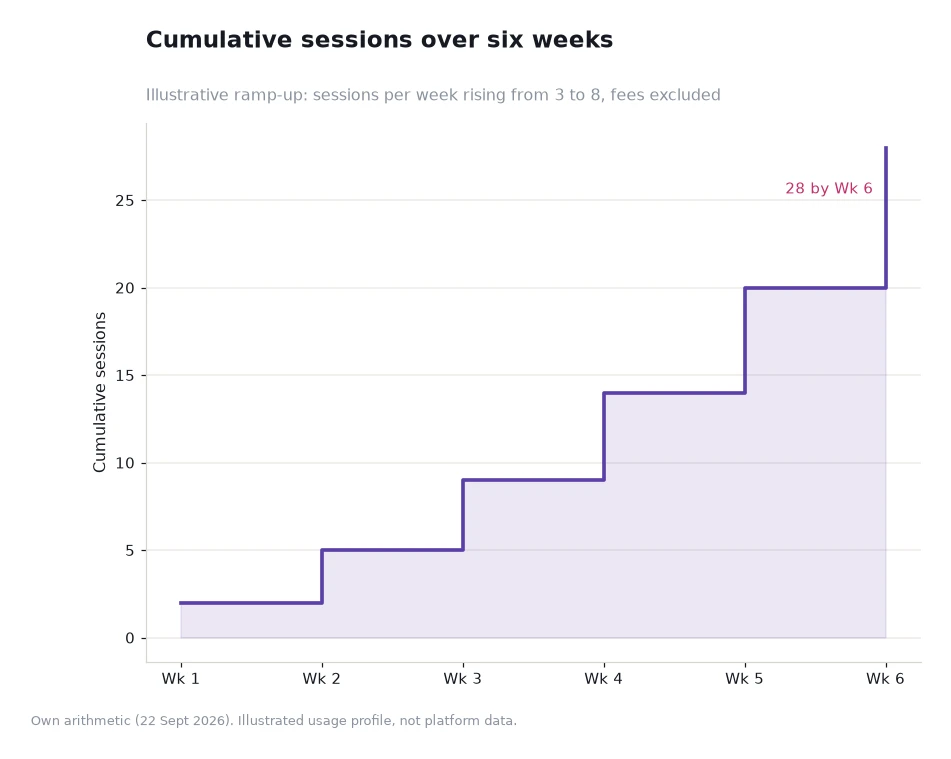
Build the arithmetic from a weekly rate rather than a daily one, because session count is what the navigation actually changes. Start with two sessions in week one, while you are still opening characters at random. Add three more in week two, five more in week three, and continue a step pattern of roughly 3, 4, 5, 6 and 8 sessions per week: two, then five, then nine, then fourteen, then twenty, then twenty-eight cumulative sessions by week six.
The pattern is deliberately unimpressive, and that is the point. Twenty-eight sessions across six weeks is under five a week on average, and it is reachable without a daily habit. The navigation work goes into making each session count: choose through Characters, verify the premise through the creator signature, and let Memories carry the context so you spend the first five minutes continuing rather than re-establishing.
Fees are excluded from the profile, because the arithmetic here is about time and repetition, not about money. If the ramp looks faster than your own experience, that is expected: this is an illustrative schedule, not a measurement of platform usage. The useful move is to compare the shape of it with your own first weeks, not the totals.
Where the three-way split pays off
The split pays off in three situations. When you want something new, the catalogue does the work. When a conversation feels inconsistent, the memory view explains it. When you find one character you like, the creator view multiplies it. The starting point for all three is https://crushon.ai/, where the navigation is laid out in that order.
Two habits keep the reading clean. Check the shelf and filter labels before you scroll, because a list without filters is twenty entries of noise. And check the date on any ranking you use, because Thursday replaces it. The NSFW AI trends list is a dated page in exactly this sense.
One caveat about the word unfiltered. It describes a catalogue slice, not an absence of rules: the platform's content and community guidelines still apply, and some limitations follow from them. Reading the interface well includes knowing which label you are inside.
Frequently asked questions
Do I need the Creators view if I only chat with one character?
Not immediately, but it costs one visit. Creators is the shortest path from one character you like to three more in the same style, and it also tells you whether the card you are reading is one of many by the same account.
Why does a conversation forget something I mentioned earlier?
Memory is a stored record rather than a transcript of everything you have ever typed, so details that never made it into the record can drop out of later replies. Reviewing the Memories view is the fastest way to see what the character is actually carrying.
How often does the ranking information change?
Weekly rankings are refreshed every Thursday, for both the Creators and the Characters leaderboards, so any rank you noted is worth re-reading the following week.
Is Characters the same thing as the homepage list?
Partially. The homepage surfaces shelves such as Recent Hits, while the catalogue view adds the full filter strip, including the Unfiltered, Filtered, 18+ and gender options.
Read the interface once, then stop thinking about it
Spend one session doing nothing but navigating: open Characters and apply two filters, check one character's memory record, then trace its creator signature. Ten minutes of that turns three labels into a mental model.
After that, the navigation disappears into habit. You will know which door answers which question, which is most of what separates a frustrating first week from a routine you can repeat.
Data and sources: platform navigation, filter labels, shelf names and the weekly Thursday rankings as published on the site, read 22 Sept 2026[1]. Session figures are an illustrative schedule built by the author, not platform data. This piece is intended for readers aged 18 and over.