Why Does Factory Capacity Matter When Choosing a Plywood Supplier?
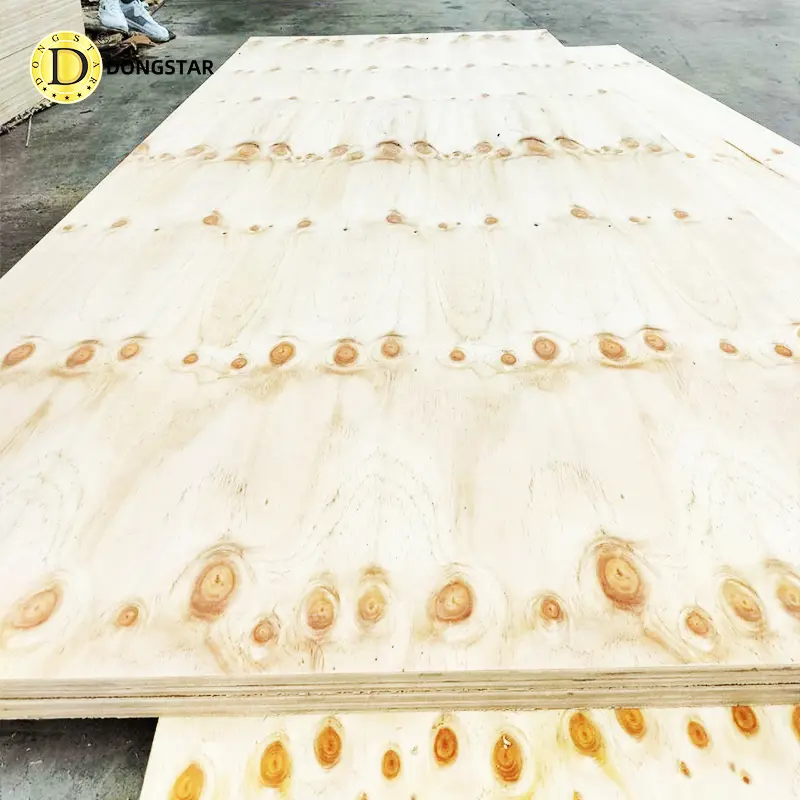
Factory capacity matters because a supplier must produce the required volume without losing control of delivery time, panel specification, or inspection. If a factory has a practical monthly capacity of 6,000 m³ and existing orders already use 85%, only 900 m³ remains available before overtime or rescheduling is required. A buyer ordering 600 m³ would consume two-thirds of that remaining space. Capacity should therefore be checked against current utilization, equipment limits, raw-material availability, and order frequency. A factory that can produce 10 containers once may not be able to supply 10 containers every month under the same specification and lead time.
When assessing a Plywood Supplier, monthly production volume should be separated into installed capacity, normal output, and currently available output. A factory may state that equipment can produce 8,000 m³ per month, while normal production is 6,000 m³ and confirmed orders already account for 4,800 m³. The buyer is not purchasing against the 8,000 m³ figure. Available production space is closer to 1,200 m³, or 20% of normal output. That utilization figure leads directly to the question of delivery reliability.
A plywood order passes through veneer preparation, drying, grading, glue spreading, lay-up, cold pressing, hot pressing, trimming, sanding, inspection, and packing. Capacity at one stage cannot compensate for a shortage at another. A plant may have hot presses capable of handling 300 panels per cycle but still lose daily output when veneer drying or sanding cannot supply material at the same rate. Production should therefore be reviewed as a complete flow rather than by counting presses alone, and that flow becomes more important as order size rises.
Consider a simple production case. A distributor requires 12 containers over 30 days, with each container representing roughly 45–55 m³ depending on panel dimensions, thickness mix, packing, and payload limits. At 50 m³ per container, the program requires about 600 m³. If the factory has only 700 m³ of free monthly production space, the order occupies about 86% of available capacity. A maintenance stop, rejected veneer batch, or delayed adhesive delivery can then move part of the order into the following production period. That production pressure is closely linked to quality control.
High output is useful only when panel specifications remain stable. Thickness, dimensions, moisture, veneer construction, bonding, sanding, face quality, edge condition, and packing should remain within the agreed requirements from the first pallet to the final pallet. A 5,000-sheet order divided across 10 production batches creates more opportunities for variation than the same specification managed under a controlled production plan with documented settings and inspections. Buyers should ask how many batches will be required and how inspection records are connected to each batch.
Capacity also affects how much time production staff can give to rework. Suppose a 10,000-sheet order has a 2% internal rejection rate at final inspection. That produces 200 sheets requiring replacement, repair, or reclassification before loading. If the factory already operates at 95% of practical capacity, replacing those panels competes with scheduled production. At 75–80% utilization, the factory has more room to replace non-conforming panels without moving the shipping date. Inspection performance therefore cannot be separated from available production space.
The same issue appears when buyers order several specifications together. A container program may include 9 mm, 12 mm, 15 mm, and 18 mm panels, two face grades, different packing marks, and more than one glue requirement. Every change can require new lay-up instructions, pressing settings, labels, inspection criteria, or packing materials. Ten containers containing one specification are usually easier to schedule than 10 containers divided across 15 SKUs. Buyers should therefore ask for capacity by production type, not only total annual output.
| Production question | Example figure | What the buyer can calculate |
|---|---|---|
| Normal monthly output | 6,000 m³ | Baseline production level |
| Confirmed monthly orders | 4,500 m³ | 75% already allocated |
| Remaining production space | 1,500 m³ | 25% still open |
| Buyer requirement | 900 m³ | 60% of remaining space |
| Planned internal allowance | 300 m³ | Room for rework or schedule changes |
The calculation also explains why annual capacity can be misleading. A supplier advertising 72,000 m³ per year appears to average 6,000 m³ per month, but timber supply, maintenance, holidays, customer order patterns, and shipping schedules rarely divide evenly into 12 identical periods. A buyer needs the production position for the month in which the order will be manufactured. Asking for the next 60–90 days of available capacity provides more useful information than relying only on an annual figure.
Raw-material storage should be reviewed alongside machine capacity. Plywood production requires enough veneer of the correct species, thickness, grade, and moisture range to support planned output. If a factory can press 6,000 m³ per month but has veneer supply for only 4,000 m³, the press figure does not represent practical output. The same applies to adhesive, film, overlay materials, cartons, straps, corner protection, and pallets. Capacity becomes more dependable when production inputs are planned against confirmed sales orders.
Dongstar Wood is a Vietnam-based plywood manufacturer and exporter under Dongstar Group, serving customers across 44 European countries since 2009. We specialize in commercial plywood, film faced plywood, construction plywood, birch plywood, furniture plywood, and customized plywood solutions.
Backed by CE 2+, FSC®, EUDR, DOP, and SEDEX (BSCI) certifications, we meet European standards for quality, sustainability, and compliance. With over 15 years of manufacturing and export experience, we support importers, distributors, furniture manufacturers, and construction companies with reliable plywood supply and OEM/ODM solutions.
For European buyers, factory capacity also has an administrative side. FSC Chain of Custody requires certified forest-based material to be identified and tracked through manufacturing and distribution, while certification bodies conduct annual audits; FSC certificates are issued on a five-year certification cycle. A factory increasing output cannot treat traceability as separate from production because certified material volumes, claims, purchasing records, manufacturing records, and sales documentation must continue to correspond.
EUDR preparation adds another production-planning requirement for wood products entering the EU market. Regulation (EU) 2023/1115 entered into force in 2023. Following later amendments, the European Commission states that application begins on 30 December 2026 for large and medium operators and on 30 June 2027 for most micro and small operators. A plywood factory serving European customers therefore needs production records that can be connected with sourcing and due-diligence information instead of treating volume as an isolated manufacturing figure.
Capacity should also be tested against growth rather than the first purchase order. A buyer may start with two containers per month and increase to eight after 12 months. At 50 m³ per container, purchasing rises from about 100 m³ to 400 m³ monthly, a 300% increase. If the factory has only 250 m³ of regular free space, the buyer may later need split production, longer lead times, or another supplier. Asking how much recurring capacity can be reserved gives a clearer view of whether the relationship can support larger programs.
Equipment redundancy deserves the same attention. A factory producing 5,000 m³ through several presses and sanding lines has a different operating structure from a factory reaching the same output with equipment running close to full utilization. If one major machine represents 40% of a production stage, maintenance can remove a large part of available output until repairs are completed. Buyers can ask how many presses, dryers, sanding lines, trimming lines, and finishing lines are normally in operation and what happens when one unit is unavailable.
Shipment planning should then be compared with manufacturing planning. Producing 500 m³ does not guarantee that 500 m³ can leave the factory on time. Finished goods need inspection, packing, storage, container booking, loading, and export documentation. If five containers are scheduled within three days, warehouse space and loading capacity matter alongside presses. A supplier should be able to explain how production completion dates connect with container loading dates rather than quoting a single lead-time number for the entire order.
A useful supplier review can therefore use a small group of measurable questions:
-
What was average monthly production during the last 12 months?
-
What percentage of practical capacity is already allocated for the requested production month?
-
How many cubic meters remain available before overtime is required?
-
How many production batches will the order require?
-
What percentage of finished panels normally requires rework or reclassification?
-
How many major presses, dryers, sanding lines, and finishing lines are available?
-
Can 10 containers be produced once, or can the same 10-container program be repeated every month?
-
How much capacity can be reserved for repeat orders during the next 6–12 months?
-
Which production steps are completed inside the factory and which, if any, are subcontracted?
-
How are FSC, customer specification, batch, inspection, and shipment records connected?
A supplier quoting 6,000 m³ of monthly capacity with 70% utilization leaves around 1,800 m³ before reaching its stated normal limit. A supplier quoting 10,000 m³ but already operating at 95% has only about 500 m³ available. The larger factory therefore does not automatically offer more usable space for a new order. Comparing available capacity, utilization percentage, batch structure, equipment coverage, and repeat-order allocation gives an importer a much more practical basis for evaluating whether production volume and delivery requirements can be maintained month after month.